A well-maintained facility is more than functioning plumbing. Every component—from doors and hardware to ceiling tiles, restroom fixtures, wall repairs, and mechanical systems—plays a role in keeping a business safe, professional, and operational. Small maintenance issues often go unnoticed until they disrupt daily operations, create safety concerns, or lead to expensive repairs.
Inspect High-Traffic Areas Regularly
Commercial facilities experience constant wear. Entry doors, closers, hinges, locks, restroom partitions, ceiling tiles, lighting, and wall finishes should be inspected routinely. Catching loose hardware, water damage, or worn components early prevents larger failures and extends the life of the facility.
Address Water Damage Immediately
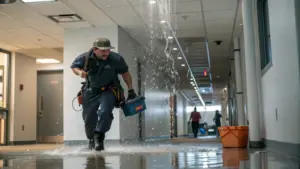
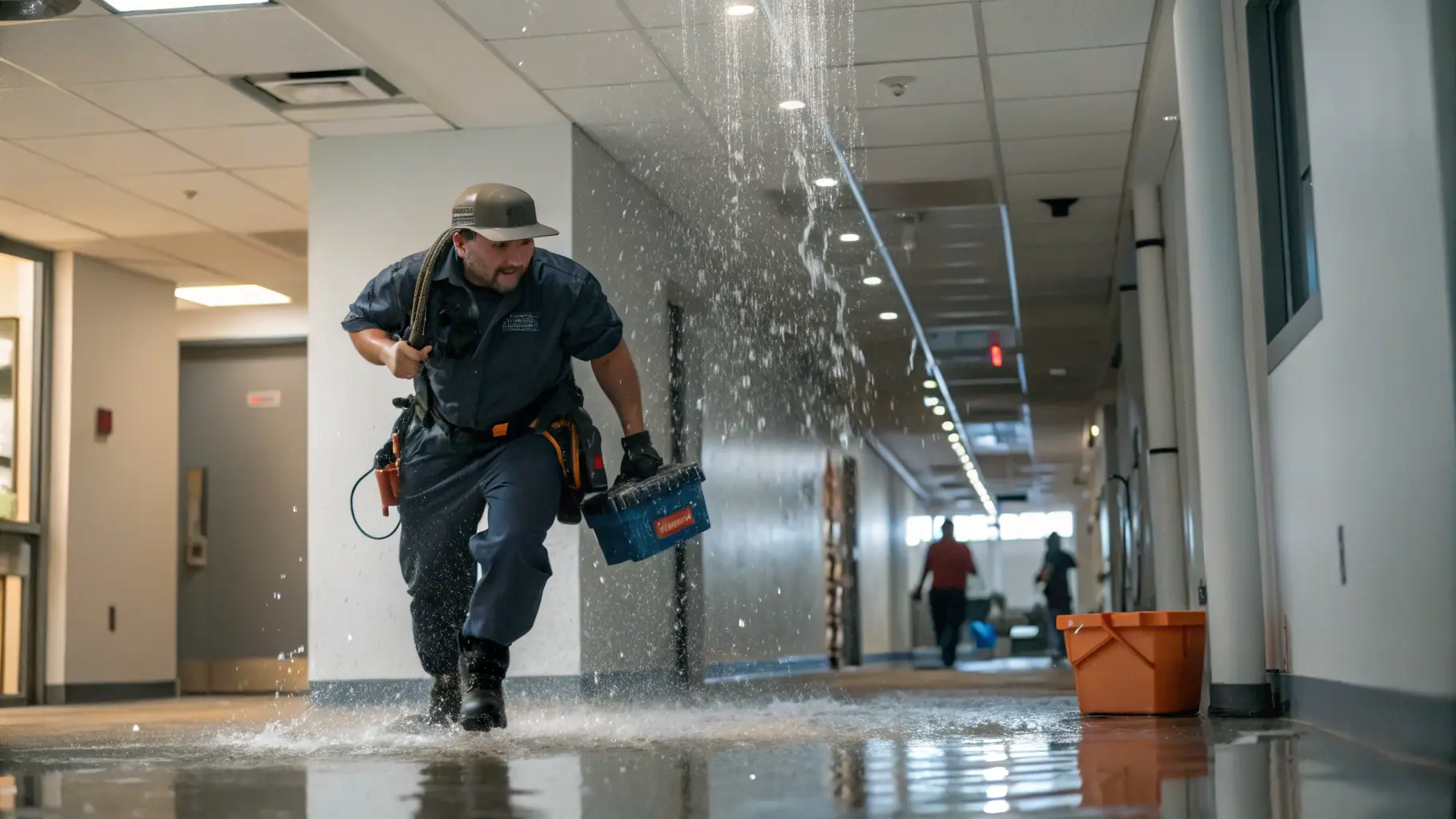
Water is one of the most destructive forces inside a building. Even minor leaks can damage drywall, flooring, insulation, electrical systems, and structural materials. If ceiling tiles become stained, walls begin to soften, or flooring starts to lift, identify and repair the source before cosmetic repairs are made.
Maintain Equipment Before It Fails
Many service calls begin with neglected equipment. Ice machines, beverage systems, water filtration units, faucets, restroom fixtures, and commercial plumbing components all perform better when cleaned, inspected, and serviced on a routine schedule. Preventative maintenance reduces downtime and extends equipment life.
Don’t Ignore Doors and Hardware
Commercial doors are opened hundreds of times every day. Loose hinges, failing closers, damaged locks, broken panic hardware, or doors that no longer close properly can quickly become security or safety issues. Regular inspection keeps entrances operating smoothly and helps maintain ADA compliance.
Think Beyond Repairs
The most effective maintenance programs don’t focus on fixing what’s broken—they focus on preventing failures before they occur. By routinely inspecting every part of a facility, businesses can reduce emergency service calls, improve safety, lower operating costs, and create a better experience for employees and customers.
A facility that receives consistent preventative maintenance doesn’t just last longer—it operates more efficiently, experiences fewer interruptions, and protects the investment made in the building and its equipment.