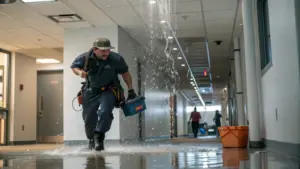
A commercial plumbing system works every day, whether it’s serving customers, employees, kitchens, restrooms, or production areas. The key to avoiding costly emergencies isn’t waiting for something to fail—it’s identifying small problems before they become major repairs. A simple preventative maintenance routine can significantly reduce downtime, extend the life of your plumbing system, and lower long-term operating costs.
Inspect for Leaks Monthly
Small leaks often go unnoticed until they cause water damage, mold, or expensive repairs. Inspect sinks, faucets, toilets, urinals, shut-off valves, water heaters, filtration systems, and exposed piping for drips, corrosion, or moisture. Even a slow leak can waste thousands of gallons of water each year.
Keep Drains Flowing
Slow drains are an early warning sign of buildup inside the piping. Regularly clean sink strainers and floor drains, remove debris before it enters the system, and avoid using chemical drain cleaners as a long-term solution. If multiple fixtures begin draining slowly, the problem may be deeper in the drain line and should be investigated before a complete blockage occurs.
Maintain Water Filtration Systems
Water filters protect plumbing fixtures and commercial equipment from sediment and mineral buildup. Replace filter cartridges according to the manufacturer’s schedule, inspect housings for leaks, and monitor water pressure. Ignoring filter maintenance can reduce water flow and shorten the life of ice machines, coffee equipment, beverage systems, and faucets.
Don’t Overlook Grease Management
For commercial kitchens, grease is one of the leading causes of drain failures. Grease traps should be cleaned on a routine schedule, and staff should never pour oils or grease directly into sinks. Proper grease management keeps drain lines flowing and helps prevent emergency backups.
Check Fixtures and Hardware
Loose faucets, running toilets, worn flush valves, damaged supply lines, and leaking shut-off valves all increase water usage and often indicate developing problems. Correcting these small issues early prevents larger repairs later.
Create a Preventative Maintenance Schedule
The most reliable plumbing systems are maintained on a schedule rather than repaired after failure. A preventative maintenance program should include routine inspections, drain cleaning, grease trap service, water filtration maintenance, fixture inspections, and leak detection. Regular maintenance helps reduce emergency service calls, protects expensive equipment, and keeps your facility operating efficiently throughout the year.